




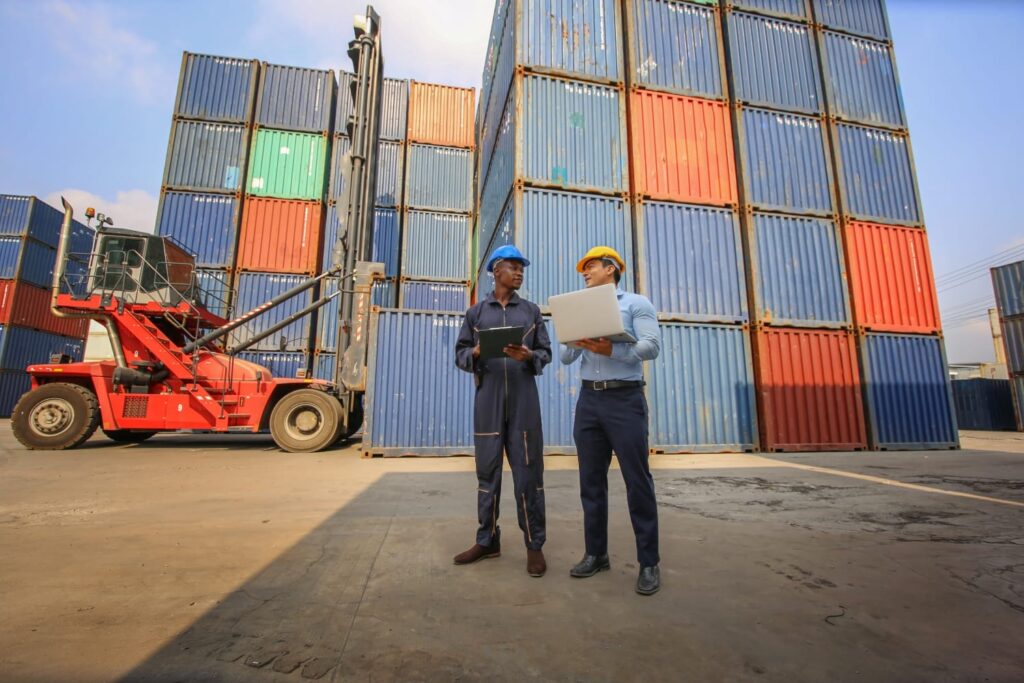
A Freight Forwarder, also known as a cargo agent, is a company specialized in organizing and coordinating the transport of goods, particularly in international trade.
Its function is to connect the different stages and providers involved in the movement of a load to find a solution adequate logistics according to the source, destination, type of merchandise, times and needs of each operation.
For businesses that import or export, to work with a Freight Forwarder allows you to centralize much of the logistics coordination and to have more visibility on the movement of your goods.
What does a Freight Forwarder?
A Freight Forwarder acts as an intermediary and coordinator between the business that needs to transport goods and different suppliers that are involved in the operation.
Depending on the service required, responsibilities may include:
- Coordination of transport by sea, air, and land.
- Selection of routes and transportation alternatives.
- Reservation of spaces with carriers.
- Freight consolidation and deconsolidation.
- Coordination between logistics service providers in origin and destination.
- Management of documentation related to the transport.
- Tracking of shipments.
- Coordination of multi-modal operations.
The scope of the service will depend on the characteristics of each operation and the solutions offered by each Freight Forwarder.
What is the difference between a Freight Forwarder and a carrier?
Although both are involved in the movement of goods, to meet different functions.
A carrier is in charge mainly of physically performing the transfer of the load by using a certain means of transport.
The Freight Forwarder, for its part, organizes and coordinates the logistics operation, and can work with different carriers, routes and modalities to develop a solution according to the needs of the client.
For example, an import may require ground transportation from the supplier’s premises to a port, international shipping, and subsequently another land transport to the final destination.
The Freight Forwarder can arrange for these stages to maintain continuity during the operation.
What types of transportation can arrange for a Freight Forwarder?
Depending on their capabilities and logistics network, a Freight Forwarder, you can manage different modalities:
Maritime transport: mainly used for international operations of greater volume by full containers (FCL), consolidated cargo (LCL), or other modalities.
Air transport: alternative used when the speed of delivery is a priority, or the characteristics of the goods require transit times smaller.
Ground transportation: used for national and international movements for road and to connect to other means of transport with a source or destination.
Multimodal transport: combines different means of transport within the same logistics solution.
The choice will depend on factors such as type of goods, volume, source, destination, budget and time available.
What are the benefits of working with a Freight Forwarder?
Coordinate an international operation means managing multiple variables at the same time. Have a Freight Forwarder can facilitate this management, and providing such benefits as:
- Centralization of the logistics coordination.
- Access to alternative routes and transport.
- Better tracking and visibility of the shipments.
- Coordination between providers in different points of the operation.
- Evaluation of alternatives based on cost and time.
- Specialized support in international operations.
The aim is not only to transport goods, but also find a solution adequate logistics for the features of each movement.
How to choose a Freight Forwarder?
Price is important, but should not be the only criterion.
Before selecting a Freight Forwarder it is wise to assess your experience, coverage, modes of transport, tracking ability, network provider and speed of response.
A lower rate can lose their advantage if the operation involves times inconvenient, unnecessary connections or lack of visibility during the transfer.
Therefore, the choice must consider both the cost and the vendor’s ability to respond to the specific needs of the supply chain.
Freight Forwarding and international logistics
International trade links across different countries, suppliers, media and transport processes. The Freight Forwarder help to integrate these elements to facilitate the movement of goods between origin and destination.
For firms that perform imports or exports, to have a logistics planning right allows you to evaluate alternatives, anticipate needs, and maintain greater control over their operations.
In Core Global Logistics , we develop logistics solutions for international transport by sea, air, and land, adapting the planning and coordination of the characteristics of each operation.
If your company needs to import or export goods, to have a logistics strategy from the start can help to build more efficient operations and to maintain greater visibility throughout the process.
Find out more about our logistics solutions international and is the appropriate alternative for your next operation.